

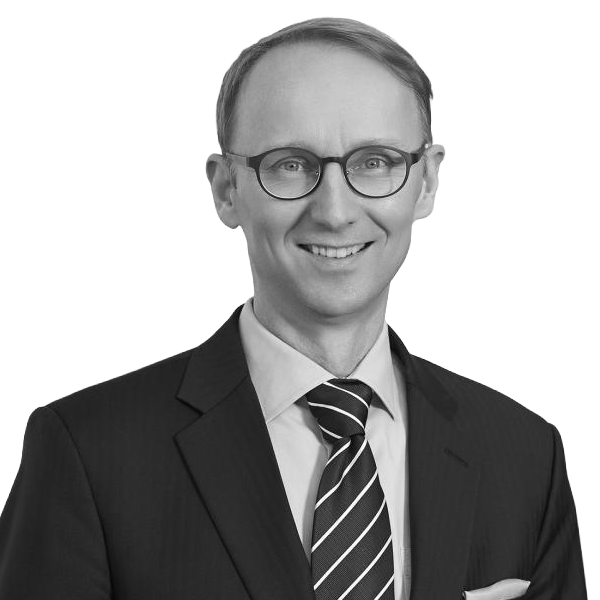


Per Stenius
EO and Client Director at Reddal, with over 20 years of experience in corporate strategy, private equity, new business building, and organizational transformation. He has a diverse background spanning science, top management consulting, venture capital, startups, and operational management. He holds a Ph.D. in Electrical Engineering and an M.A. in Economics from the University of California, Santa Barbara. Prior to founding Reddal in 2010, he held senior positions at McKinsey & Company, Accenture, and Stratos Ventures. He serves as an Adjunct Professor at Seoul School of Integrated Sciences & Technologies and has lectured at Yonsei University in Korea. His work focuses on strategy, innovation ecosystems, SME growth, private equity, and cross-border business development, particularly between Europe and Asia (with a strong focus on South Korea). He has spoken at numerous international conferences on technology management, innovation policy, and private equity, including IRAMOT.
Specialization
Corporate Strategy, Private Equity and Venture Capital, New Business Building, Innovation Ecosystems, SME Growth, and Organizational Transformation
Main Themes Addressed in the Lecture
- Complex framework of government responses to the pandemic and their cyclical effects on the economy and innovation
- Impact of COVID-19 on R&D and venture capital in the West (short-term decline, but significant dry powder remaining)
- Rising inequality and the risk of social instability
- Technology tensions between the US, China, and Europe (5G, AI, semiconductors)
- China: greater focus on the domestic market and health innovation through public-private partnerships
- Southeast Asia: rapid growth of the digital economy and leapfrogging opportunities (e.g., Vietnam)
- Iran: post-JCPOA innovation progress and the need to strengthen IP and the entrepreneurial ecosystem
- Cyclical view of history (Fourth Turning): possibility of the crisis ending and a high period beginning
- Recommendation: continue technology innovation while also addressing inequality for long-term success